
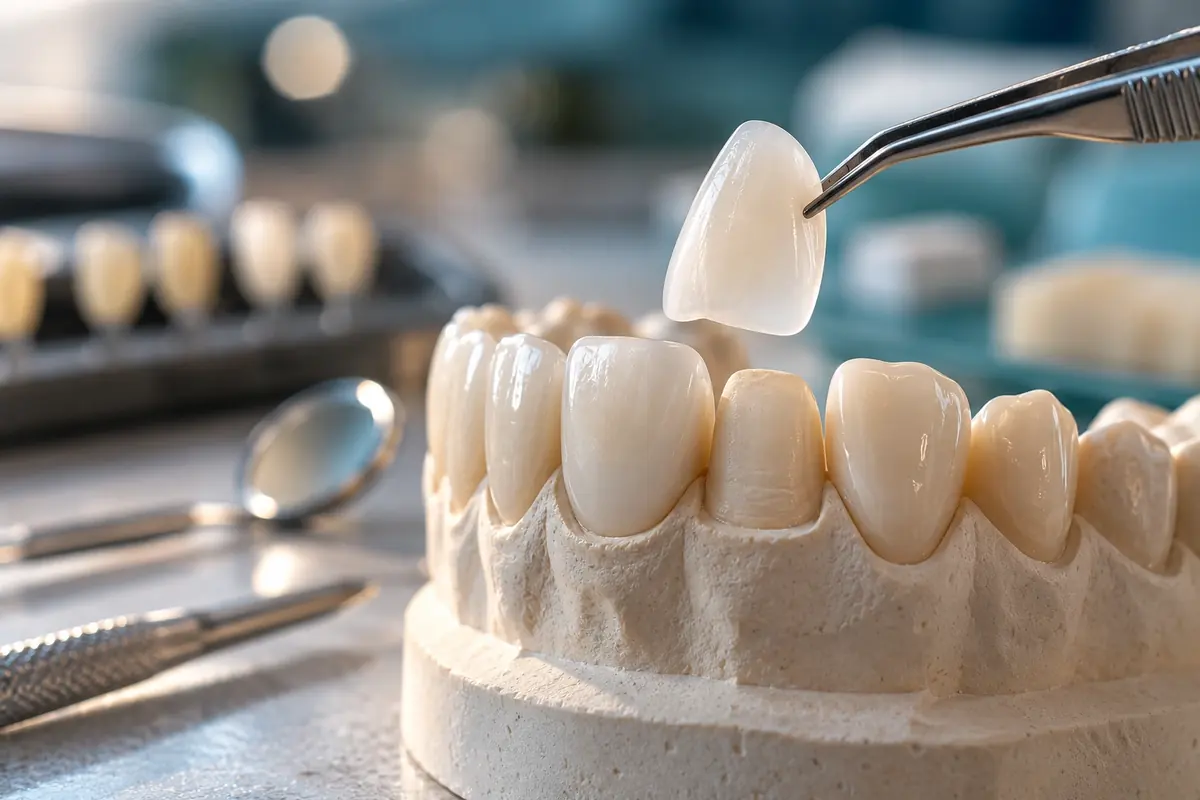
A veneer is a thin shell bonded to the front of a tooth to change its look. It removes less tooth than a crown, but it still means removing enamel, and that cannot be undone. Veneers can chip, wear or come loose, and need replacing over the years.
The question that matters most is not “how many veneers?” but “does this tooth need a veneer, a crown or neither, and how much of it will be removed?” Get the answer in writing, tooth by tooth.
What patients are quoted
We are collecting anonymous quotes for this treatment. Figures appear here once at least ten quotes are in.
Share the price you were quoted. It is multiple choice only and asks for no personal details. How the figures are calculated.
At a glance
- Can it be undone?
- No. Enamel is removed.
- How long?
- Porcelain: laboratory-made, two or more visits. Composite: often one visit.
- Reported lifespan
- Around 8 to 10 years for crowns and veneers with good care (Leeds).
- Ask first
- Veneer or crown, tooth by tooth, and how much tooth is removed?
What veneers are
The American Dental Association describes veneers as custom-made, natural-looking coverings that fit over the front surface of teeth. They are used for chips, stains, crooked teeth and gaps. Unlike a crown, a veneer does not cover the whole tooth.
| Type | How it is made | Points to know |
|---|---|---|
| Porcelain (ceramic) | A thin shell is made in a laboratory from an impression or scan. A small amount of enamel is removed first and the veneer is bonded on a later visit. | Described by the ADA as strong, long-lasting and natural-looking. Usually the more expensive type. |
| Composite (resin) | Tooth-coloured resin is built up and bonded directly on the tooth, often in one visit. | May need less enamel removal and fewer visits and is easier to repair, but is less resistant to stains and wear. |
Veneer or crown: the most important decision
A crown covers the whole tooth, so the tooth is reduced all the way round. Leeds Teaching Hospitals notes that veneers remove less tooth structure than crowns and cover only the front surface, and that a crown involves removing some tooth structure. Measurements often cited from a 2002 laboratory study put the amount of the tooth crown removed at roughly 3–30% for a veneer and 63–72% for a full crown (see the risk page for the detail and caveats).
A crown is not wrong: it can be the right treatment for a badly broken tooth, a heavily filled tooth or a root-filled tooth. The concern is a crown placed on a healthy tooth when the patient expected a veneer. Make sure your plan says veneer or crown for each tooth.
What to expect
- Examination and X-rays.Existing decay or gum disease should be treated first. The ADA warns that veneers over unhealthy teeth may worsen existing dental problems.
- Planning.Shade, shape, how many teeth and whether a trial of the look (a mock-up) is possible. Ask to see one.
- Preparation.For porcelain veneers, a small amount of enamel is removed. Ask how much and whether the dentist will measure it.
- Temporary veneers.May be used while the laboratory makes the final ones.
- Fitting and bonding.The fit and colour are checked before bonding. Tell the dentist at once if your bite feels wrong, so it can be corrected.
- Review.A check after a few weeks, and regular check-ups.
Risks, limits and care
- Irreversible. The ADA states that treatment is not reversible because enamel is removed.
- They can fail. Veneers may chip, crack, wear or loosen and may need re-bonding, repair or replacement. A cavity can still form under or around a veneer.
- Not for everyone. Teeth grinding, clenching or a deep overbite may make veneers a poor choice.
- Unlicensed providers. The ADA warns that irreversible procedures should be done by licensed dentists, and that unlicensed “veneer techs” risk tooth damage, nerve damage and infection.
- Cost beyond the first set. Veneers are cosmetic and are often not covered by insurance. Plan for replacement over the years.
Care: avoid nail-biting and chewing hard items, wear a mouthguard for sport, limit staining drinks, brush twice a day with fluoride toothpaste and clean between teeth daily (ADA).
Younger patients. Removing enamel from healthy teeth early in life can mean replacement many times over decades. Talk about less invasive options, such as whitening, small corrections or orthodontics, before agreeing to veneers.
Questions to ask before you agree
Tap a question to copy it, then paste it into a message or an email.
Veneer checklist
Tick items off as you complete them. Your ticks stay in this browser only.
Before you book in Türkiye
The same checks apply whichever treatment you choose. Each links to a full guide.
- Check the authorisation. Make sure the clinic, and any agency, holds a Ministry of Health authorisation for international patients. How to verify it
- Get the plan in writing, tooth by tooth. It should name the treatment, materials and brands for each tooth, and the full price. Questions to ask
- Read the guarantee before you pay. Find out what it covers, for how long and who pays for travel if something needs fixing. Guarantees
- Know what you are agreeing to. You have the right to clear information about risks and alternatives before you consent. Informed consent
- Take your records home. Ask for X-rays, scans and a written summary, including implant brands and sizes. Dental records
- Plan aftercare before you go. Find a dentist at home who will see you for checks and problems. Follow-up care
- Know where to turn if things go wrong. Complaint routes
Frequently asked questions
How long do veneers last?
The ADA gives no fixed figure. A Leeds Teaching Hospitals leaflet says a crown or veneer should normally last around 8–10 years with good care. Replacement is expected at some point.
Are composite veneers cheaper and better?
They may need less enamel removal and are easier to repair, but they stain and wear more. “Better” depends on your teeth and priorities.
Can veneers be removed later?
The veneer can be replaced, but the enamel removed cannot be restored. A replacement is usually needed.
Can I get veneers in a few days?
It depends on the plan. Porcelain veneers need laboratory time. Ask what is planned for each day and what happens if the fit or colour is not right.