

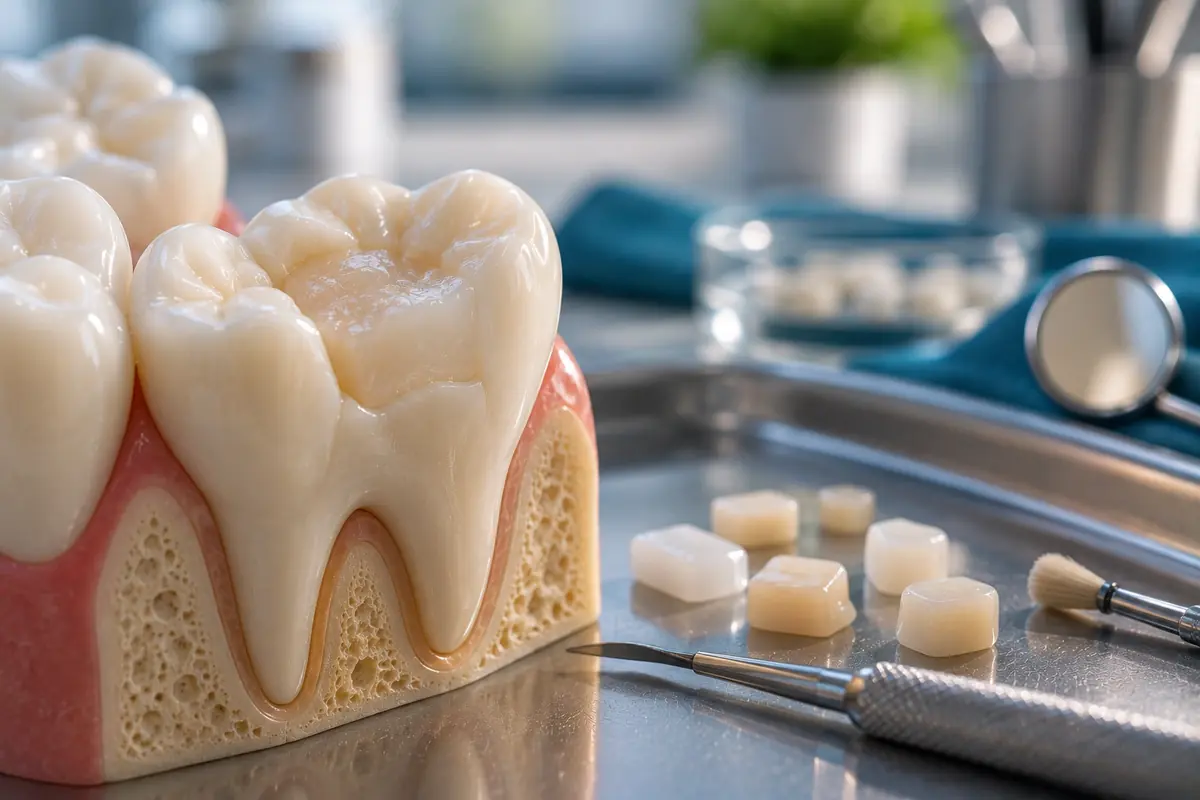
A filling replaces tooth lost to decay, wear or damage and seals the hole. Composite (white) fillings are tooth-coloured and bond to the tooth. Amalgam fillings are silver-coloured. Fillings are the most common dental treatment and the least dramatic, so the main question is whether you need one at all.
Ask which tooth, how big the cavity is, which material and why. A plan that lists many fillings should show each tooth and its X-ray.
What patients are quoted
We are collecting anonymous quotes for this treatment. Figures appear here once at least ten quotes are in.
Share the price you were quoted. It is multiple choice only and asks for no personal details. How the figures are calculated.
At a glance
- Can it be undone?
- The decayed part is removed, so no. The filling can be replaced.
- How long?
- Usually one visit per filling.
- Reported lifespan
- Composite typically 5 to 7 years, sometimes 10 or more (Bristol Dental School).
- Ask first
- Which teeth, which material, and why?
Types of filling
| Type | What it is | Points from the sources |
|---|---|---|
| Composite (white) | Tooth-coloured resin bonded to the tooth and set with a blue light. | Colour-matched, bonds to the tooth so less tooth is removed, and strong enough for back teeth. Takes longer to place than amalgam and may need replacing more often (Bristol). |
| Amalgam | A silver-coloured filling. | The NHS describes it as a mixture of mercury, silver, tin and copper, used to repair holes caused by decay. |
| Glass ionomer | A cement. | Bristol notes it is often used as a temporary (intermediate) filling. |
| Inlay or onlay | Made in a dental laboratory and cemented on. | Used for teeth that need more reinforcement (Bristol). |
The NHS says your dentist will offer the most appropriate type of filling according to your clinical needs. Composite is not always suitable: for example when the tooth is hard to keep dry, when the cavity reaches near or under the gum, or when it is very large (Bristol).
What happens, and aftercare
- Numbing.Local anaesthetic may be used. Numbness can last several hours, so avoid eating on that side and avoid hot drinks until feeling returns.
- Isolating and cleaning.A rubber dam may keep the tooth dry. The decay is removed and the cavity shaped.
- Bonding and placing.For composite, a gel prepares the cavity, a thin bonding layer and the filling are applied and set with a blue light.
- Shaping and polishing.Check that the bite feels right before you leave.
- Aftercare.Sensitivity is common. Bristol says it should not last more than 2 weeks, and to tell the dentist if it persists. Brush twice daily for 2 minutes with fluoride toothpaste.
Risks, limits and what to watch
- Wear and failure. Composite can roughen, discolour, chip or fracture over time (Bristol).
- Many fillings can mean a bigger problem. If a plan lists many teeth, ask whether the decay is real, how deep it is, and whether some teeth can be monitored or treated more simply. Ask to see the X-rays.
- Deep decay. A large or deep cavity may need an inlay, a crown or a root canal instead (see those guides).
- Material questions. Ask which material is used and why. The sources we reviewed do not rank materials for individual patients, so rely on your dentist’s reasoning.
Questions to ask before you agree
Tap a question to copy it, then paste it into a message or an email.
Filling checklist
Tick items off as you complete them. Your ticks stay in this browser only.
Before you book in Türkiye
The same checks apply whichever treatment you choose. Each links to a full guide.
- Check the authorisation. Make sure the clinic, and any agency, holds a Ministry of Health authorisation for international patients. How to verify it
- Get the plan in writing, tooth by tooth. It should name the treatment, materials and brands for each tooth, and the full price. Questions to ask
- Read the guarantee before you pay. Find out what it covers, for how long and who pays for travel if something needs fixing. Guarantees
- Know what you are agreeing to. You have the right to clear information about risks and alternatives before you consent. Informed consent
- Take your records home. Ask for X-rays, scans and a written summary, including implant brands and sizes. Dental records
- Plan aftercare before you go. Find a dentist at home who will see you for checks and problems. Follow-up care
- Know where to turn if things go wrong. Complaint routes
Frequently asked questions
How long does a filling last?
A Bristol Dental School leaflet gives 5 to 7 years for composite, sometimes 10 or more. Individual results vary.
Is amalgam safe?
The sources we reviewed for this page do not address the safety of amalgam, so we do not make a claim. Ask your dentist about it and see national health authority guidance.
Is a white filling better than amalgam?
Composite matches the tooth colour and bonds to it, but may not last as long as amalgam (Bristol). Better depends on the tooth.
Does it hurt?
Local anaesthetic may be used and the area stays numb for several hours. Some sensitivity afterwards is common.