
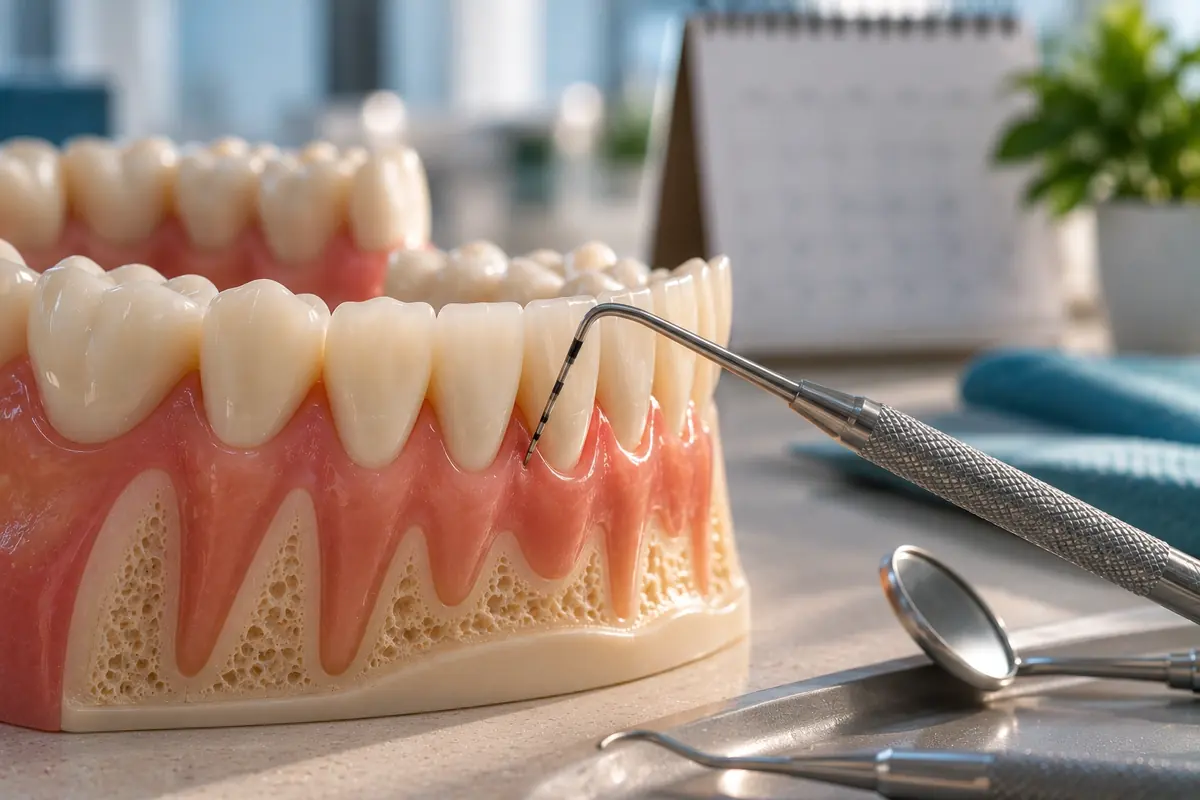
Gum disease (periodontitis) can destroy the gum and bone supporting the teeth if untreated. Treatment starts with deep cleaning and teaching you to clean your teeth. Surgery is considered when the disease still needs treatment after that.
The result depends heavily on your cleaning routine and on regular maintenance afterwards, so ask who will look after your gums when you are home.
What patients are quoted
We are collecting anonymous quotes for this treatment. Figures appear here once at least ten quotes are in.
Share the price you were quoted. It is multiple choice only and asks for no personal details. How the figures are calculated.
At a glance
- Can it be undone?
- Lost gum and bone do not return, but regeneration material may be used.
- How long?
- Usually go home the same day; stitches out 7 to 10 days later (Guy’s).
- Rinse
- Antiseptic mouthwash for at least 1 to 2 weeks (Guy’s).
- Ask first
- Has deep cleaning been tried first, and who maintains it?
What gum disease and gum surgery are
Guy’s and St Thomas’ says bacteria in plaque irritate the gums and cause bleeding. If untreated, gum disease can destroy the gum and bone supporting the teeth. Surgery is considered when gum disease still needs treatment after a dentist has deep-cleaned the teeth and taught you how to clean them.
Alternatives: regular scaling, removing some teeth (with replacement options such as dentures, bridges or implants), or no treatment.
What happens in gum surgery
- Local anaesthetic.You stay awake without pain.
- Access.The surgeon cuts around the gum edge and lifts it to reach the roots.
- Cleaning and reshaping.Plaque and tartar are removed, and gum and bone may be reshaped.
- Regeneration material.Bone or attachment regeneration material may be applied.
- Stitches.Hold the gum in place. Removed at follow-up 7 to 10 days later.
Risks, recovery and long-term care
- Risks and side effects: bleeding, bruising and swelling of the gums or face, temporarily looser teeth, sensitivity to hot, cold or sweet foods, gaps between teeth, and teeth looking longer.
- Recovery: gums will be sore; paracetamol for a few days; you cannot brush the treated teeth straight away, so use an antiseptic mouthwash for at least 1 to 2 weeks.
- Maintenance: routine usually set about 3 months after surgery; regular scaling often still needed, on fewer teeth.
- Smoking slows healing. If you cannot quit, stop for at least 2 weeks after surgery (Guy’s).
Questions to ask before you agree
Tap a question to copy it, then paste it into a message or an email.
Gum treatment checklist
Tick items off as you complete them. Your ticks stay in this browser only.
Before you book in Türkiye
The same checks apply whichever treatment you choose. Each links to a full guide.
- Check the authorisation. Make sure the clinic, and any agency, holds a Ministry of Health authorisation for international patients. How to verify it
- Get the plan in writing, tooth by tooth. It should name the treatment, materials and brands for each tooth, and the full price. Questions to ask
- Read the guarantee before you pay. Find out what it covers, for how long and who pays for travel if something needs fixing. Guarantees
- Know what you are agreeing to. You have the right to clear information about risks and alternatives before you consent. Informed consent
- Take your records home. Ask for X-rays, scans and a written summary, including implant brands and sizes. Dental records
- Plan aftercare before you go. Find a dentist at home who will see you for checks and problems. Follow-up care
- Know where to turn if things go wrong. Complaint routes
Frequently asked questions
Do I always need surgery?
No. Surgery is considered only when disease persists after deep cleaning and cleaning instruction (Guy’s).
Can I go home the same day?
Yes, usually (Guy’s).
Will treatment cure it for good?
No. Results depend on your brushing habits and the starting severity, and maintenance is needed (Guy’s).
Does smoking matter?
Yes. Stopping helps healing; if not possible, stop at least 2 weeks after surgery (Guy’s).
Sources
Further reading from NHS and professional sources: